
 Canadian
Pacific BBQ Salmon with Wild Rice
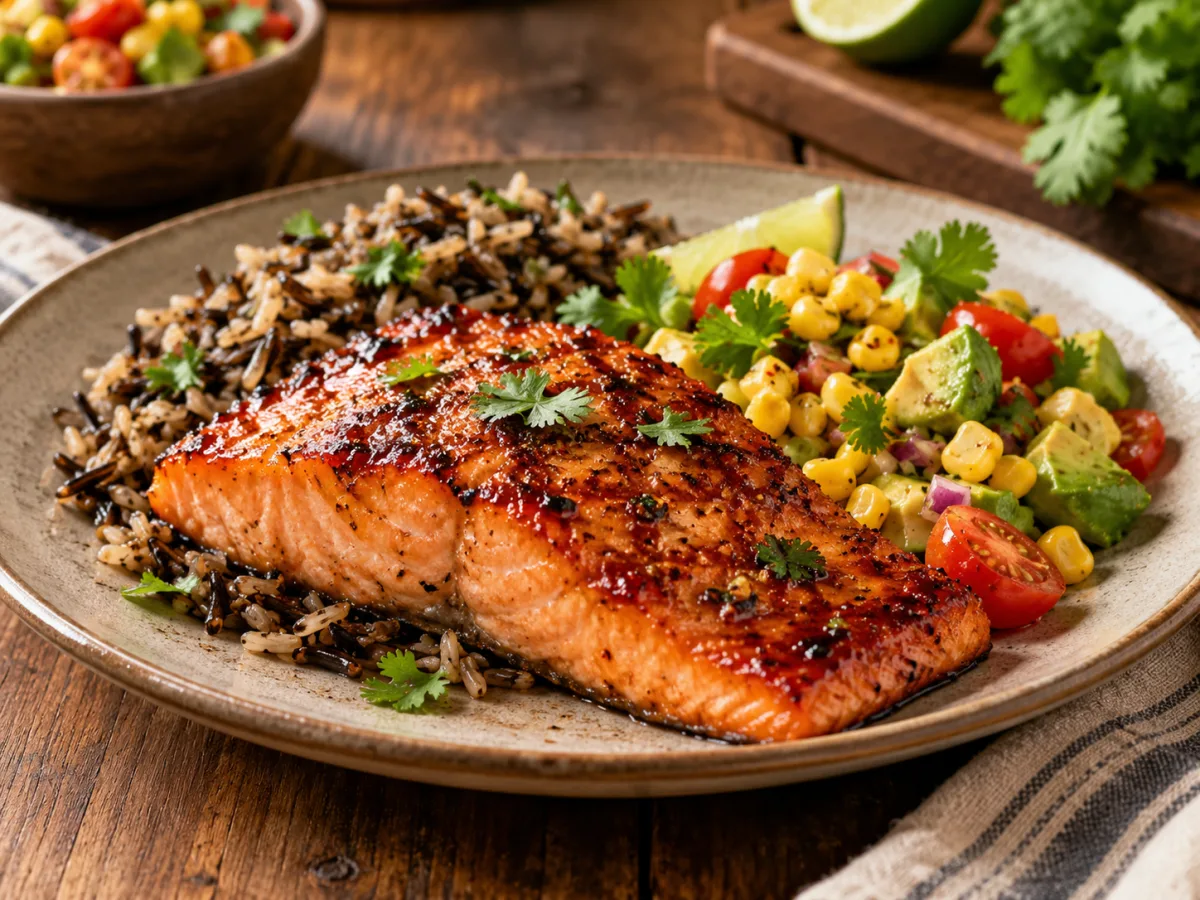
Everyone loves salmon and this dish is no exception. B.C. Sockeye salmon provides a richer taste in comparison to other fish, and can be made in a variety of ways. British Columbia salmon with spice, avocado and corn doing the heavy lifting.
What It Is
Everyone loves salmon and this dish is no exception. B.C. Sockeye salmon provides a richer taste in comparison to other fish, and can be made in a variety of ways. British Columbia salmon with spice, avocado and corn doing the heavy lifting.
Origin
Wild-caught Pacific salmon and wild rice both have deep roots in Indigenous foodways of the Pacific Northwest and Great Lakes regions, long before either became a menu staple elsewhere.
Fun Fact
Wild rice isn't actually rice — it's the seed of an aquatic grass native to the Great Lakes region, long harvested by Anishinaabe communities using canoes and cedar poles. Calling it "rice" is a bit like calling a moose a big deer.






Ingredients
- 4 5-oz pieces wild salmon
- 1½ tsp coriander
- 1½ tsp brown sugar
- 1½ tsp chili powder
- Kosher salt, to taste
- 6 tbsp extra-virgin olive oil, divided
- ½ shallot, thinly sliced
- 3 tbsp red wine vinegar
- 2 cups corn kernels
- ½ cup grape tomatoes, halved
- ½ cup yellow tomatoes, halved
- 1½ avocados, diced
- ¼ cup chopped cilantro
- ½ tsp white pepper
Steps
- Preheat oven to 400°F. Arrange salmon skin-side down on plate.
- In a small bowl, whisk together coriander, brown sugar, and chili powder and season with salt. Rub mixture into salmon. Spice Food and Milk If you want wild-caught salmon, you want Pacific salmon. That's not because wild-caught Atlantic salmon wouldn't be fabulous but Atlantic salmon sold commercially are all farmraised. Yep. All of them. The Pacific Ocean is home to six types of salmon, and U.S. and Canadian boats fish five of them: King, Sockeye, Silver, Pink, and Chum.
- Place shallots and red wine vinegar in small bowl and let sit. In large bowl, stir together corn, tomatoes, avocados, and cilantro.
- Heat 3 tablespoons olive oil in large non-stick ovenproof skillet over mediumhigh heat until nearly smoking. Sear salmon fillets skin-side up 2 minutes. Flip, then transfer skillet to oven and cook 3 minutes more or until salmon is just cooked through.
- Add red wine vinegar and shallots to corn mixture, along with remaining 3 tablespoons olive oil. Season with salt and pepper. To make Ketogenic friendly, omit the rice and corn. To make Gluten-free friendly, omit glutenous rice.


 Notes
Notes
Don't overcook the salmon — pull it when it still looks slightly underdone in the centre, since it keeps cooking a bit after it's off the heat.
 Substitutions
Any firm white fish can stand in for salmon if that's what's available. Brown rice works instead of wild rice, though you'll lose some of the nutty character. Smoked paprika can round out the chili powder if you want extra depth.
 Storage
Refrigerate salmon and rice separately for up to 2 days. Fish reheats best gently, in a low oven rather than a blasting microwave.
 Freezing
Not stated in the cookbook. Most cooked bases can be frozen in airtight meal-sized portions, but dairy sauces, potatoes and fresh garnishes may change texture after thawing.