
 Japanese
✦ Inspired by: Detective Conan-inspired naming
Kudo Shinichi’s Yakitori Sauce
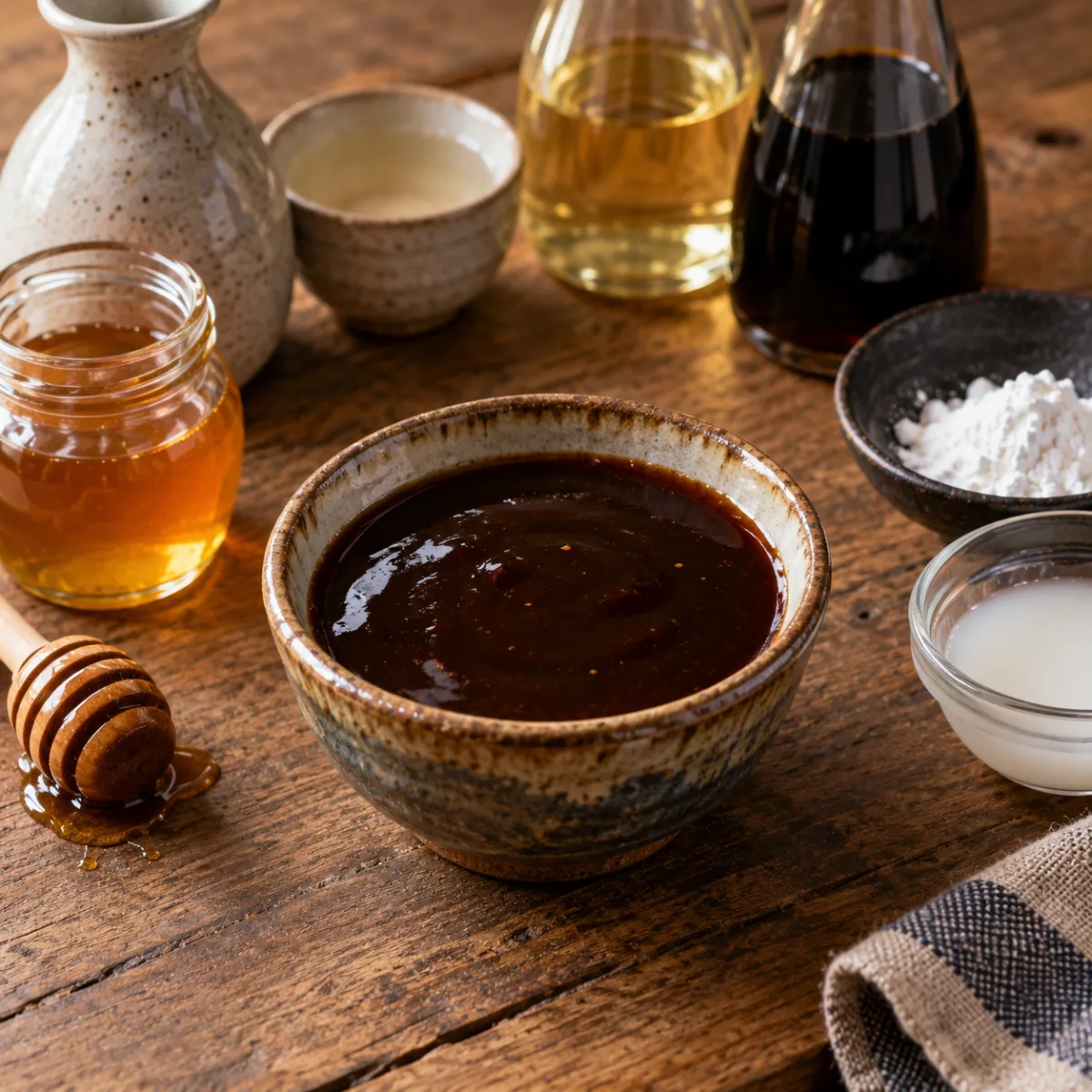
Sake, mirin, soy sauce and honey simmer into a glossy yakitori-style glaze, then cornstarch gives it that clingy lacquer that makes grilled chicken look like it has excellent lighting.
What It Is
Sake, mirin, soy sauce and honey simmer into a glossy yakitori-style glaze, then cornstarch gives it that clingy lacquer that makes grilled chicken look like it has excellent lighting.
Origin
Yakitori tare is a Japanese grilling sauce commonly built from soy sauce, mirin, sake and sugar. This version uses honey and a little starch for extra body.
Fun Fact
Yakitori literally refers to grilled chicken, but the tare is useful far beyond skewers. Sauces, unlike detectives, rarely object to being reassigned.





Ingredients
- ½ cup sake
- 1 cup mirin
- 1 cup light soy sauce
- 1 tbsp warm honey
- 2 tbsp cornstarch
- ⅓ cup warm water



 Notes
Simmer this until it visibly coats the back of a spoon — that's the texture you're aiming for, not a thin liquid.
 Substitutions
Dry sherry can replace sake if that's not available. Light brown sugar can stand in for mirin's sweetness in a pinch, though you'll lose some of its distinct flavour. Regular soy sauce works instead of light, the result will just be a shade darker.
 Storage
Cool completely and refrigerate in a sealed jar for up to about 2 weeks. It will thicken when cold; warm gently or loosen with a splash of water.
 Freezing
 is usually unnecessary for a small batch of sauce. If you do freeze it, use small portions and expect creamy or emulsified sauces to need a good whisk after thawing.